As residents remembered it, the railroad divided Hurley's Mexican American and Anglo families from 1910 into the 1950s, while at the Chino works federal investigators found pay and job discrimination in 1942 and the NLRB refused Mine-Mill an election for the AFL-held craft units in 1945.
No camping south of the tracks: Hurley, 1910 to the 1950s
Claude Dannelley, a longtime Hurley resident, recorded his memories in July 1960. He remembered a rule in force in the fall of 1910, when construction of the mill was starting: "No camping, horses or mules were allowed on the south side of the tracks." He did not say who made the rule. The camps he remembered went up along A Street, one of the streets he places in North Hurley, on ground running west toward a small muddy reservoir. It filled fast with tents and shacks, he said. Water was carried from yard hydrants set about every 220 feet, and a camp site cost one dollar a month in ground rent.1
As Nelson L. Haggerson remembered it, the railroad stayed Hurley's dividing line for decades. Haggerson, who grew up nearby and later taught at Hurley, recalled the track turning east along the south edge of north Hurley, where it separated Mexican American families from Anglo families. Being "on the other side of the tracks", he wrote, was a plain fact there for many years, and until the 1950s north Hurley was the part set aside for Mexican American mine and mill workers. Ellen R. Baker, in her 2007 book On Strike and on Film, writes that Santa Rita and Hurley were both segregated from the very beginning. The historian Stephen Fox writes that the two Chino towns were the first fully segregated towns in Grant County; in his account their practices then spread through the county.2
Sources: Nelson L. Haggerson, From Geronimo's Lookout: Stories about Growing Up and Living in the Southwest: An Autobiography (Nornel Associates, Tempe, 1993): Hurley chapter; Ellen R. Baker, On Strike and on Film: Mexican American Families and Blacklisted Filmmakers in Cold War America (University of North Carolina Press, 2007), ch. 2, "Grant County's Mining District": ch. 2
Carmen Abalos described the division from the Mexican American side. Interviewed at Hurley in 2004 about her wartime job with Kennecott, she spoke, in the words of the writer who told her story, of a works where Anglo employees had their own entrances and their own lines for paychecks. In town, by that account, the railroad tracks divided the neighborhoods. The written story places her job at Santa Rita and does not say which town's tracks she meant. A letter from the war years describes a matching arrangement at the plant. On 28 April 1943 Verne Curtis, the Silver City representative of the International Union of Mine, Mill and Smelter Workers, wrote to Eleanor Roosevelt about it. Kennecott, he told her, kept separate passageways for Mexican American and Anglo workers going in and out of its plant.
Sources: Story by Kenneth Cantu; interview by Brenda Sendejo, Carmen B. Salaiz Esqueda Abalos (Voces Oral History Center story, from an interview recorded in Hurley, N.M.) (interview 2004-07-15): story text, paragraph on prejudice; Kenneth Cantu (writer); Brenda Sendejo (interviewer); Voces Oral History Center, University of Texas at Austin, Carmen B. Salaiz Esqueda Abalos (Voces Oral History Center story, from an interview at Hurley, 15 July 2004) (2004-07-15): story text; Nelson L. Haggerson, From Geronimo's Lookout: Stories about Growing Up and Living in the Southwest: An Autobiography (Nornel Associates, Tempe, 1993): Hurley chapter; President's Committee on Fair Employment Practice, Region X (Dallas), Nevada Consolidated Copper 10BN154 (FEPC Region X closed case file, 18 page images) (1943-1944): page image 12 (letter of April 28, 1943, stamped received APR 30 1943)
North Hurley, built by the people who lived there, 1911 to the 1950s
North Hurley began, in Dannelley's account, with a lease. About 1911-12, he said, Chino leased a strip of land north of town, about where the golf course lay when he spoke in 1960. Individuals put up their own businesses on it: a grocery, a shoe repair shop, a jewelry store, a saloon and a meat market. He remembered a large saloon and gambling hall as well, with a two-story red-light building of 25 rooms beside it and a row of ten one-room adobe apartments known as the cribs, all under one ownership.
Houses, in Ellen Baker's account, went up on leased land as well. She writes that the company leased land to Mexican workers, who built their own houses on it, both in the part of Santa Rita called Mexican Town and in North Hurley. In 1940 the National Labor Relations Board said that some Mexican families owned homes standing on company property and moved them away during the long shutdown of the 1930s; it did not say in which of the two towns. Haggerson remembered north Hurley as a school, a Legion hall, a few company houses and many houses built and owned by Mexican American families. Baker, whose evidence comes from the 1940s and early 1950s, found that those homes had no indoor plumbing, unlike the Anglo houses in Hurley.
Sources: Ellen R. Baker, On Strike and on Film: Mexican American Families and Blacklisted Filmmakers in Cold War America (University of North Carolina Press, 2007), ch. 2, "Grant County's Mining District": ch. 2, text after note 88; ch. 2; p. 167 (chapter "Household Relations"), text at note 68; National Labor Relations Board, Matter of Nevada Consolidated Copper Corporation and International Union of Mine, Mill and Smelter Workers, 26 N.L.R.B. 1182 (decided 24 Aug. 1940) (1940-08-24): 26 N.L.R.B. at 1192; Nelson L. Haggerson, From Geronimo's Lookout: Stories about Growing Up and Living in the Southwest: An Autobiography (Nornel Associates, Tempe, 1993): Hurley chapter
North Hurley, as Dannelley described it in 1960, had its places to gather. He listed a Star Theatre on C Street, a dance hall on B Street and a handball court there with a high two-sided adobe wall. Mexican Independence Day, he said, was kept for two days and nights each 15 and 16 September around the north-side tennis court, with fireworks, rodeos and ring tournaments on horseback. It opened at five in the morning with a salute of dynamite shots, the dynamite supplied free by Chino.
Dannelley was blunt about the rule behind this. He called the two groups Americans and Spanish-Americans, the vocabulary of 1960. In early Hurley, he said, they were not allowed to mix at any social gathering. Neither was allowed on the other's side of the tracks at night until about 1916, when the Tejo Theatre opened and served everybody. Other separations lasted much longer. Writing in the New Mexico Historical Review in 2012, Bronstein says white workers in Hurley and Santa Rita could use the well-equipped Chino club, while Mexican American workers had only the smaller Casino. A catalog of New Mexico trade tokens lists an undated token from a Casino Mexicano at Hurley. Baker writes that the Hurley swimming pool was reserved for Anglos until Sunday, when Mexican Americans were allowed to swim just before the pool was cleaned for the week.3
Sources: Claude Dannelley (spelled Claud Dannelley / Donnelley within the text), Hurley, New Mexico: Historical Data from 1910-1960. 50 Years of Recorded Memories by Claude Dannelley (transcript of a tape begun July 13, 1960, with a later note of about 1963; 10 pages, distributed by JW Art Gallery, 'The Old Hurley Store') (1960-07-13 (note c. 1963; PDF posted c. 2010)); (compiler not identified in the search record), Interim Listing of New Mexico Trade Tokens (1986), Hurley listings: Hurley listings; Ellen R. Baker, On Strike and on Film: Mexican American Families and Blacklisted Filmmakers in Cold War America (University of North Carolina Press, 2007), ch. 2, "Grant County's Mining District": ch. 2, text after note 104
Common labor at $2.10 a shift, shovel engineers at $6.50: Santa Rita and Hurley, 1912 to the 1940s
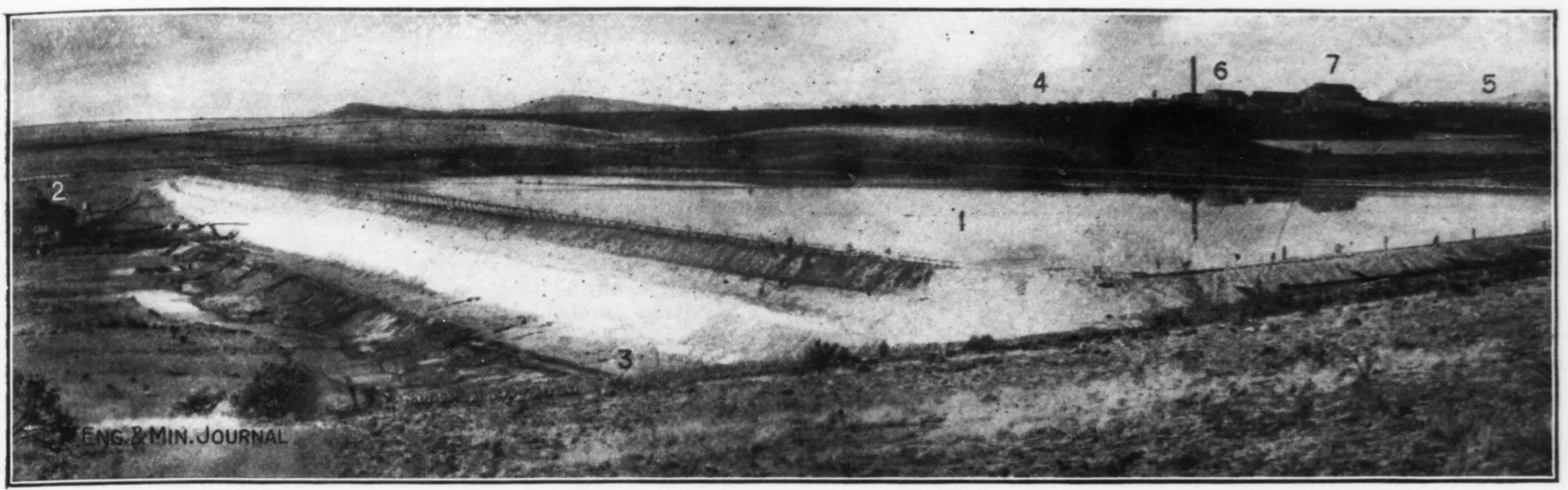
In 1923 T. A. Rickard, describing the Santa Rita pit in the Engineering and Mining Journal-Press, put the division at work in one sentence: "All the unskilled labor in the pit is done by Mexicans." The shovel and train crews, he went on, were Americans, a word he said took in a few British and Canadians. His terms need explaining. Before the steam shovels came, Rickard writes, most of Chino's Mexican employees were natives of New Mexico; afterward the company recruited part of its larger force from Mexico. In his usage, as in Dannelley's, American meant Anglo.
Sources: T. A. Rickard, "The Chino Enterprise - IV", Engineering and Mining Journal-Press, vol. 116 no. 26 (29 December 1923), pp. 1113-1121 (1923-12-29): p. 1120; p. 1121; Claude Dannelley (spelled Claud Dannelley / Donnelley within the text), Hurley, New Mexico: Historical Data from 1910-1960. 50 Years of Recorded Memories by Claude Dannelley (transcript of a tape begun July 13, 1960, with a later note of about 1963; 10 pages, distributed by JW Art Gallery, 'The Old Hurley Store') (1960-07-13 (note c. 1963; PDF posted c. 2010))
Rickard's pay figures show the distance between the two ends of that line. Common labor earned $2.00 a shift in 1914, $3.65 at the peak in 1919 and $2.10 when he wrote; shovel engineers earned $6.50 a shift. He gives no rates for the Hurley mill. In 1912 the shovel engineers, then paid $175 a month, walked off overnight asking $190. By 1914 that was their rate, though Rickard insists it had not been a union strike. A wartime scale that tied wages to the price of copper failed, he writes, because the men refused to abide by it when copper fell. Chino in 1922 was an open shop, with no union.
Two later memoirs describe the ladder. Jan Thomas, an Anglo son of company families who wrote of his 1940s childhood, said of Santa Rita and the company generally that Mexican American workers were seldom chosen for promotion to any job above laborer. Haggerson summed up what he saw at Hurley: most laborers were Mexican Americans, and most foremen and all officials were Anglo Americans.
Sources: Jan Thomas, From Blunder to Blessing (first chapter as published on Reedsy Discovery) (published c. 2021 (memoir of a 1940s childhood)): chapter 1, Santa Rita paragraphs; Nelson L. Haggerson, From Geronimo's Lookout: Stories about Growing Up and Living in the Southwest: An Autobiography (Nornel Associates, Tempe, 1993): Hurley chapter
The first shutdown: Santa Rita and Hurley, 1921 and 1922
Accounts written between 1921 and 1923 differ on the day the Chino mines and the Hurley mill closed. A Silver City dispatch in the Ranger Daily Times of Texas reported on 1 April 1921 that a complete shutdown of mining and milling at Santa Rita and Hurley would come within ten days. The Geological Survey's review of New Mexico mining in 1921, printed in the Artesia Advocate, says the mines and mill closed on 31 March. T. A. Rickard dates the shutdown to April 1921. By 11 May a dispatch in the Albuquerque Morning Journal called the complete shutdown recent. These reports do not settle the exact day work stopped.4
Sources: Ranger Daily Times (Ranger, Texas), 1 April 1921, p. 2: "Chino Copper Company To Cease Operations" (Silver City dispatch) (1921-04-01): p. 2, 'Chino Copper Company To Cease Operations'; Artesia Advocate, 13 January 1922, p. 3 (U.S. Geological Survey review of New Mexico mining in 1921) (1922-01-13): p. 3 (mining review); T. A. Rickard, "The Chino Enterprise - IV", Engineering and Mining Journal-Press, vol. 116 no. 26 (29 December 1923), pp. 1113-1121 (1923-12-29): p. 1120
In 1940 the National Labor Relations Board called it the first general shutdown of mine and mill, lasting about a year, to April 1922. Rickard writes that the company once carried as many as 1,200 men. Dannelley recalled that he and eleven others stayed on at Hurley as watchmen over the mill yard, tailings dams and townsite, working 12-hour nights at $3.50 a shift.
Sources: National Labor Relations Board, Matter of Nevada Consolidated Copper Corporation and International Union of Mine, Mill and Smelter Workers, 26 N.L.R.B. 1182 (decided 24 Aug. 1940) (1940-08-24): 26 N.L.R.B. at 1195; T. A. Rickard, "The Chino Enterprise - IV", Engineering and Mining Journal-Press, vol. 116 no. 26 (29 December 1923), pp. 1113-1121 (1923-12-29): p. 1120; Claude Dannelley (spelled Claud Dannelley / Donnelley within the text), Hurley, New Mexico: Historical Data from 1910-1960. 50 Years of Recorded Memories by Claude Dannelley (transcript of a tape begun July 13, 1960, with a later note of about 1963; 10 pages, distributed by JW Art Gallery, 'The Old Hurley Store') (1960-07-13 (note c. 1963; PDF posted c. 2010))
Chino came back in April 1922. The Engineering and Mining Journal-Press reported that the company resumed on 1 April, on telegraphed instructions from the chairman of the board, with ten days of clean-up before one unit of the Hurley mill was to start on 10 April. About 500 men were to be put to work at Hurley and Santa Rita, the journal said, with preference for old employees and output held at first to half of capacity.
The Board later described how that reopening was handled: the company sent its agent from house to house in Santa Rita and Hurley calling former employees back, and practically everyone who wanted work was rehired. One Hurley record in its file shows the pattern. Marcelo Avalos started at the mill in 1911, worked off and on until the 1921 shutdown, was recalled in 1922 and then worked steadily until the 1934 closing.
A union vote and a closing, nine days apart: Hurley, 1933 to 1935
In July 1933, after the National Industrial Recovery Act, the company sponsored an employees' representation plan at Santa Rita and Hurley. The International Union of Mine, Mill and Smelter Workers, known as Mine-Mill, chartered the Chino Mine Workers Union No. 63 at Santa Rita on 24 March 1934, and Local 63 took in Hurley mill workers as well as Santa Rita men. Work was scarce by then. The work period at both places had been cut to about 13 days a month, and the company said it had lost two and a half million dollars there between 1931 and September 1934.
Sources: U.S. Court of Appeals for the Tenth Circuit (Phillips, J.; Bratton, J., dissenting), Nevada Consolidated Copper Corp. v. National Labor Relations Board, 122 F.2d 587 (10th Cir., decided 27 Aug. 1941) (1941-08-27): ¶11 (122 F.2d at 589); ¶12 (122 F.2d at 589); National Labor Relations Board, Matter of Nevada Consolidated Copper Corporation and International Union of Mine, Mill and Smelter Workers, 26 N.L.R.B. 1182 (decided 24 Aug. 1940) (1940-08-24): 26 N.L.R.B. at 1189, note 16
On 15 September 1934 the workers voted, in a government-supervised election, on whether Local 63 should represent them. Santa Rita voted 215 for and 92 against, and the union was certified there. Hurley voted it down: a federal appeals court gave the count as 87 for and 129 against, and the National Labor Relations Board's figure was 89 for and 129 against. A Hurley worker testified, and no one denied it, that before the vote his foreman had warned the men that "if we voted for the union the company would close down its work". The Board quoted an assistant mine superintendent as well. The camp had run for 25 years, he told a worker, and the men had been protected; it would be better to have a union with the company and the superintendent as its president.
Sources: U.S. Court of Appeals for the Tenth Circuit (Phillips, J.; Bratton, J., dissenting), Nevada Consolidated Copper Corp. v. National Labor Relations Board, 122 F.2d 587 (10th Cir., decided 27 Aug. 1941) (1941-08-27): ¶11 (122 F.2d at 589); National Labor Relations Board, Matter of Nevada Consolidated Copper Corporation and International Union of Mine, Mill and Smelter Workers, 26 N.L.R.B. 1182 (decided 24 Aug. 1940) (1940-08-24): 26 N.L.R.B. at 1189; 26 N.L.R.B. at 1191
Nine days after the vote, on 24 September 1934, the company stopped operations at Santa Rita and Hurley. It posted closing notices on 9 October and expected the shutdown to last five to ten years. In the week the plant stopped, Hurley's mill workers received a Mine-Mill charter as the Hurley Mill Workers Union No. 69. Julio Grado was its president and Ismael Moreno its financial secretary and treasurer. Of 185 day-pay employees at Hurley when the plant closed, 59 belonged to Local 69.
Sources: U.S. Court of Appeals for the Tenth Circuit (Phillips, J.; Bratton, J., dissenting), Nevada Consolidated Copper Corp. v. National Labor Relations Board, 122 F.2d 587 (10th Cir., decided 27 Aug. 1941) (1941-08-27); National Labor Relations Board, Matter of Nevada Consolidated Copper Corporation and International Union of Mine, Mill and Smelter Workers, 26 N.L.R.B. 1182 (decided 24 Aug. 1940) (1940-08-24): 26 N.L.R.B. at 1189, note 16
Two federal records and a historian disagree on the Hurley charter. The Board dates it to 24 September 1934, the day the plant stopped; the appeals court dates it to 27 September. Baker writes that Hurley workers chose their own local, which then lost the election. In the federal records the vote of 15 September was on Local 63, and Local 69 was chartered afterward. Nothing in either record settles which charter date is right.
Sources: National Labor Relations Board, Matter of Nevada Consolidated Copper Corporation and International Union of Mine, Mill and Smelter Workers, 26 N.L.R.B. 1182 (decided 24 Aug. 1940) (1940-08-24): 26 N.L.R.B. at 1189, note 16; U.S. Court of Appeals for the Tenth Circuit (Phillips, J.; Bratton, J., dissenting), Nevada Consolidated Copper Corp. v. National Labor Relations Board, 122 F.2d 587 (10th Cir., decided 27 Aug. 1941) (1941-08-27): ¶11 (122 F.2d at 589); Ellen R. Baker, On Strike and on Film: Mexican American Families and Blacklisted Filmmakers in Cold War America (University of North Carolina Press, 2007), ch. 2, "Grant County's Mining District": ch. 2
The payroll fell at once. The Board counted 343 employees at Santa Rita and 245 at Hurley in September 1934, and by November 45 at Santa Rita and 70 at Hurley. Its September figure for Hurley is larger than the court's 185, evidently because it included salaried staff. Local 63 charged that the closing was aimed at the union. After a hearing in February 1935 the Mountain States Regional Labor Board found that the cause was purely economic. In December 1935 the Hurley power plant was shut down completely, something the Board said had never happened in the 25 years of the operation.
Sources: National Labor Relations Board, Matter of Nevada Consolidated Copper Corporation and International Union of Mine, Mill and Smelter Workers, 26 N.L.R.B. 1182 (decided 24 Aug. 1940) (1940-08-24): 26 N.L.R.B. at 1191-1192; 26 N.L.R.B. at 1192; U.S. Court of Appeals for the Tenth Circuit (Phillips, J.; Bratton, J., dissenting), Nevada Consolidated Copper Corp. v. National Labor Relations Board, 122 F.2d 587 (10th Cir., decided 27 Aug. 1941) (1941-08-27): ¶20 (122 F.2d at 590); ¶13 (122 F.2d at 590)
Reopening with a list: Hurley, 1936 to 1939
Chino reopened in January 1937, and this time rehiring ran through the superintendents and a list. R. B. Tempest, the general manager, had drawn up a list of former employees who were not to be rehired. The mine superintendent identified 114 members of Local 63 on it and 14 men who were not members. The company said the list named men it believed had threatened officials or property in 1934. At Hurley the power to hire rested with one man, the mill superintendent, Hodges; foremen could not hire. The National Labor Relations Board later found that Hodges had been given a copy of Tempest's list.5
Sources: U.S. Court of Appeals for the Tenth Circuit (Phillips, J.; Bratton, J., dissenting), Nevada Consolidated Copper Corp. v. National Labor Relations Board, 122 F.2d 587 (10th Cir., decided 27 Aug. 1941) (1941-08-27): ¶69 (122 F.2d at 597); ¶46 (122 F.2d at 593); National Labor Relations Board, Matter of Nevada Consolidated Copper Corporation and International Union of Mine, Mill and Smelter Workers, 26 N.L.R.B. 1182 (decided 24 Aug. 1940) (1940-08-24): 26 N.L.R.B. at 1216-1217; 26 N.L.R.B. at 1196
Former Hurley mill workers testified about what applying was like. One said that when he asked for work at Hurley in November 1936 the superintendent asked his view of the union. On hearing that he was a union man, the superintendent told him, "We don’t need your services." The company denied that union membership was the reason. Another mill hand said he was turned away after giving that answer, and was hired only when he went back and said he did not know what union the superintendent was talking about. A Hurley carpenter testified that his foreman told him in 1937 he would probably not be taken back because he had been in the union. Marcelo Avalos, a trustee of Local 69, was among those the Board found had been refused work in 1936 and 1937 for their membership.
Sources: U.S. Court of Appeals for the Tenth Circuit (Phillips, J.; Bratton, J., dissenting), Nevada Consolidated Copper Corp. v. National Labor Relations Board, 122 F.2d 587 (10th Cir., decided 27 Aug. 1941) (1941-08-27): ¶36 (122 F.2d at 592); ¶35 (122 F.2d at 592); National Labor Relations Board, Matter of Nevada Consolidated Copper Corporation and International Union of Mine, Mill and Smelter Workers, 26 N.L.R.B. 1182 (decided 24 Aug. 1940) (1940-08-24): 26 N.L.R.B. at 1217; 26 N.L.R.B. at 1218
Figures in the appeals court's opinion show how thoroughly the Hurley workforce changed. Of 376 day-pay employees at Hurley in February 1937, only 74 had been on the payroll in September 1934; four of every five were new. The force grew to 503 by April 1938 and to 746 by December 1939, when 88 percent had not been on the September 1934 payroll. Work was still not steady. Pit operations were suspended in July 1938, only stripping went on until mid-October, and with no ore arriving the Hurley mill was closed for those months.
Sources: U.S. Court of Appeals for the Tenth Circuit (Phillips, J.; Bratton, J., dissenting), Nevada Consolidated Copper Corp. v. National Labor Relations Board, 122 F.2d 587 (10th Cir., decided 27 Aug. 1941) (1941-08-27): ¶20 (122 F.2d at 590); ¶22 (122 F.2d at 591); National Labor Relations Board, Matter of Nevada Consolidated Copper Corporation and International Union of Mine, Mill and Smelter Workers, 26 N.L.R.B. 1182 (decided 24 Aug. 1940) (1940-08-24): 26 N.L.R.B. at 1194-1195
The Santa Rita and Hurley blacklist case goes to the Supreme Court, 1938 to 1942
Mine-Mill took the refusals to the National Labor Relations Board, the federal board that heard such charges. On 21 April 1938 the Board issued a complaint against the company, Nevada Consolidated Copper Corporation. It charged that since 1 January 1937 the company had refused to rehire 61 named men because of their union activity, and 61 more names were added during the hearing. The Board ruled on 24 August 1940. Of the 89 cases it weighed, 21 came from Hurley, and it found that the company had practiced the same discrimination against union members at the mill as at the mine. The Board itself called Tempest's list a blacklist. By then the company had begun hiring some of the complainants: six of the Hurley men were taken on between 27 September and 11 November 1939, Avalos on the last of those days.
Sources: U.S. Court of Appeals for the Tenth Circuit (Phillips, J.; Bratton, J., dissenting), Nevada Consolidated Copper Corp. v. National Labor Relations Board, 122 F.2d 587 (10th Cir., decided 27 Aug. 1941) (1941-08-27): ¶23 (122 F.2d at 591); National Labor Relations Board, Matter of Nevada Consolidated Copper Corporation and International Union of Mine, Mill and Smelter Workers, 26 N.L.R.B. 1182 (decided 24 Aug. 1940) (1940-08-24): 26 N.L.R.B. at 1216-1217; 26 N.L.R.B. at 1242, Appendix C; 26 N.L.R.B. at 1218
On 27 August 1941 the U.S. Court of Appeals for the Tenth Circuit, the first court to review the Board's order, refused to enforce it, with one judge dissenting. It accepted as reasonable the company's explanation that it had barred men it connected with threats and sabotage in 1934. The case then went to the U.S. Supreme Court, which reversed on 27 April 1942 and directed that the Board's order be enforced. The justices held that there was substantial evidence for the Board's conclusion that the company's motive was to discourage union membership, even though the record could also have supported the company's account. The men refused work at Santa Rita and Hurley were to be employed, with back pay, more than seven years after the vote of September 1934.
Sources: U.S. Court of Appeals for the Tenth Circuit (Phillips, J.; Bratton, J., dissenting), Nevada Consolidated Copper Corp. v. National Labor Relations Board, 122 F.2d 587 (10th Cir., decided 27 Aug. 1941) (1941-08-27): ¶74 (122 F.2d at 597); ¶11 (122 F.2d at 589); U.S. Supreme Court (per curiam), National Labor Relations Board v. Nevada Consolidated Copper Corp., 316 U.S. 105 (1942) (1942-04-27): 316 U.S. at 107; 316 U.S. at 106
Laborers and craftsmen vote separately: Hurley and Santa Rita, 1941 to May 1942
While the blacklist case was in the courts, organizing started again at Santa Rita and Hurley. In February 1941 nine craft and railroad unions petitioned the Board to represent the workers there. One of them, affiliated with the American Federation of Labor (AFL), was Local No. 890 of the International Union of Operating Engineers; the number 890 was later that of Mine-Mill's local at Chino. Mine-Mill, an affiliate of the Congress of Industrial Organizations (CIO), was signing up members too. Baker writes that 122 people joined Hurley's Local 69 in March 1941 alone. When Mine-Mill filed its petition on 8 September 1941 it handed the Board 760 signed cards, 386 from the Hurley payroll and 225 from Santa Rita's. In 1934 the union's strength had lain at Santa Rita.
Sources: National Labor Relations Board, Matter of Kennecott Copper Corporation, Nevada Consolidated Copper Corporation and Brotherhood of Railroad Trainmen et al., 40 N.L.R.B. 986 (decided 29 Apr. 1942) (1942-04-29): 40 N.L.R.B. at 988; 40 N.L.R.B. at 993, note 10; Ellen R. Baker, On Strike and on Film: Mexican American Families and Blacklisted Filmmakers in Cold War America (University of North Carolina Press, 2007), ch. 2, "Grant County's Mining District": ch. 2, text at note 65; Committee on Fair Employment Practice, Region X (Dallas), Kennecott Copper 10BN155 (FEPC closed case file, Region X; includes Final Disposition Report of July 11, 1944 and Field Examiner L. Virgil Williams's memorandum of December 1, 1943 on the Nevada Consolidated Copper Corporation case) (1943-12-01 to 1944-07-12); U.S. Court of Appeals for the Tenth Circuit (Phillips, J.; Bratton, J., dissenting), Nevada Consolidated Copper Corp. v. National Labor Relations Board, 122 F.2d 587 (10th Cir., decided 27 Aug. 1941) (1941-08-27): ¶11 (122 F.2d at 589)
The Board heard the case at Silver City from 8 to 12 September 1941. At issue was how to group the workers for voting. The craft and railroad unions wanted only the skilled jobs, about 940 of the 1,800 employees, and in the main did not seek the laborers. Mine-Mill asked for a single unit of all production and maintenance workers. The Board found no history of collective bargaining at the two plants that could settle the matter. Testimony was taken on which races and nationalities the AFL unions would admit as members; those unions asked to have it struck from the record, and the Board refused. A body called the American Employees' Association tried to join the case as well. The Board kept it out for its thin showing of members but allowed it a place on the ballot.
Baker writes that Mine-Mill's big rally before the election was held on what was called the "Spanish side of Hurley". At least one large meeting, she writes, took place in a hall of the Alianza Hispano-Americana, the Mexican American mutual-aid society. The elections were held on 26 May 1942, a month after the Supreme Court ruling, and the workers voted in separate groups. In the largest, the 627 production and maintenance workers whom no craft union claimed, Mine-Mill received 495 votes, the American Employees' Association 28, and 16 were cast for no union.
Sources: Ellen R. Baker, On Strike and on Film: Mexican American Families and Blacklisted Filmmakers in Cold War America (University of North Carolina Press, 2007), ch. 2, "Grant County's Mining District": ch. 2; National Labor Relations Board, Matter of Kennecott Copper Corporation, Nevada Consolidated Copper Corporation, 42 N.L.R.B. 35 (supplemental decision and certification of representatives, 2 July 1942) (1942-07-02): 42 N.L.R.B. at 35; 42 N.L.R.B. at 39; U.S. Supreme Court (per curiam), National Labor Relations Board v. Nevada Consolidated Copper Corp., 316 U.S. 105 (1942) (1942-04-27): 316 U.S. at 107
The skilled groups went the other way in May 1942. The 321 operators of powered equipment chose Operating Engineers Local 890 over Mine-Mill by 146 to 108. Electricians and powerhouse operators chose the electrical workers' union by 70 to 9, and plumbers and pipefitters chose the Plumbers' union by 25 to 0. On 2 July the Board certified the results. The Machinists and the Operating Engineers had signed one-year exclusive contracts with the company on 12 June. A federal fair-employment memo later summed up the division the Board had made: two railway brotherhoods, eight AFL craft unions and one CIO union.
Sources: National Labor Relations Board, Matter of Kennecott Copper Corporation, Nevada Consolidated Copper Corporation, 42 N.L.R.B. 35 (supplemental decision and certification of representatives, 2 July 1942) (1942-07-02): 42 N.L.R.B. at 38; 42 N.L.R.B. at 37-38; 42 N.L.R.B. at 39; National Labor Relations Board, Matter of Kennecott Copper Corporation and International Union of Mine, Mill & Smelter Workers, Locals 63 and 69, 50 N.L.R.B. 842 (decided 25 June 1943) (1943-06-25): 50 N.L.R.B. at 844; Committee on Fair Employment Practice, Region X (Dallas), Kennecott Copper 10BN155 (FEPC closed case file, Region X; includes Final Disposition Report of July 11, 1944 and Field Examiner L. Virgil Williams's memorandum of December 1, 1943 on the Nevada Consolidated Copper Corporation case) (1943-12-01 to 1944-07-12)
The fair-employment file: Hurley and Santa Rita, 1942 to 1944
Mine-Mill took the question of who could enter the skilled departments to another federal body, the Committee on Fair Employment Practice (FEPC), which acted under an executive order against discrimination in employment. Before August 1942 the union filed complaints that Mexican workers at Hurley and Santa Rita were never allowed to move from the common labor gang into several departments. It named the machinists, the pipe fitters and train service, where the railroad brotherhoods' agreement kept Spanish-speaking men as car droppers and out of brakeman and engineman jobs. It charged dual pay rates for the same work. In the Hurley mill's oil department, the complaint said, Spanish-speaking men in jobs once held by Anglo workers were paid less than those workers had been. Mexican workers who asked the AFL unions to take up their grievances were refused or put off.
FEPC field representatives came in August 1942 and met management, the unions and rank-and-file members. Their report said flatly that "there is discrimination" against Spanish-speaking workers in job classification, pay and upgrading. It followed, they wrote, a traditional local pattern. They wrote down rates. In the carpenter shop Mexican American workers received $6.55 a day and Anglo workers $8.00; in the paint shop the rates were $5.55 and $7.20. Management, they recorded, often reworded a job classification to make room to pay an Anglo worker more. In their view the three-way split of the workforce among the brotherhoods, the AFL and the CIO made the discrimination worse. Both union factions told the Committee that a unity program would keep management from using the union situation as an excuse.
From August 1942 the file becomes a record of letters. Beginning on 20 August the Committee wrote to the company for the distribution and wages of Mexican workers, payroll sheets and its method of recruiting, and its examiner recorded considerable difficulty in getting compliance through April 1943. On 8 February 1943 it asked the company to notify its unions that it would meet its duty not to discriminate. The company declined on 12 April 1943, saying the Committee should tell the unions itself. In a letter of that date Kennecott's Chino Mines Division at Hurley said it employed 228 non-citizens and had no bar against hiring them.
A field examiner's memo of 1 December 1943 counts the workforce in the Committee's categories: 514 Americans and 440 Spanish Americans at Hurley, and 356 and 456 at Santa Rita. The Hurley figures add to 954, though the memo types 964, and its total of 1,780 does not match the 1,766 its rows produce. The examiner concluded that the company had never complied with the directive to instruct its unions. No final settlement, the memo says, appears in the file.
On 12 July 1944 the case against Kennecott, 10-BN-155, closed with its final disposition given only as Other. The file on the union's general complaint, 10-BN-154, closed that day with the same word and explains it. Curtis had been met in Silver City in February 1944, and the general charges broken down into individual cases. Each was docketed separately and taken up with management.
Sources: Committee on Fair Employment Practice, Region X (Dallas), Kennecott Copper 10BN155 (FEPC closed case file, Region X; includes Final Disposition Report of July 11, 1944 and Field Examiner L. Virgil Williams's memorandum of December 1, 1943 on the Nevada Consolidated Copper Corporation case) (1943-12-01 to 1944-07-12); President's Committee on Fair Employment Practice, Region X (Dallas), Nevada Consolidated Copper 10BN154 (FEPC Region X closed case file, 18 page images) (1943-1944): page image 1 (Final Disposition Report, section D)
What the workers put in writing: Hurley, 1942 and 1943
Workers gave the Committee statements in 1942 and early 1943, and its Silver City file keeps them as unsigned typed copies. One came from a head oiler at Hurley who had first been hired on 19 April 1912. Five months after the union contract of July 1942 classified him as a head oiler, he said, he was still paid $5.55 a shift. That, he said, was the rate the company had always paid Mexican workers in that department.
A man hired in 1937 said he was lining pipes with asbestos in the plumbing department for about $5.35 a shift, against $6.15 for Anglo workers on the same job. When he asked for a plumber's helper job, he said, he was told that it took a smart man to be a plumber's helper.
A third man had started as a laborer in 1939 and moved to the crusher and the roll plant. When the company hired Anglo workers into his department, he said, "we the Spanish workers would break them in", and the newcomers drew more pay from their first day than men who had worked for the company for years. He put his pay at $1.60 a day less than Anglo workers received for the same work. After a dispute over a Christmas layoff, he said, he was put back in the labor gang at $1.00 a day less.
Two statements of 1942 describe being turned away from the trades. A man who had first hired on in 1916 had worked in the electrical shop since 1939. On 1 August 1942, he said, he asked for a helper's job, and the electrical boss told him there was no place in the electrical gang for Mexicans. A laborer hired in 1937, an Army veteran who had worked as a pipe fitter at Fort Bliss, said he asked the superintendent why no Mexican worker could get a helper's job in the craft departments. The answer he recorded was that there was a dual race problem.
An unsigned union memorandum on dual wage rates, filed with memoranda from Curtis of 1943, set out the pattern. Every Mexican American, it said, was hired into the track gang at Santa Rita or the labor gang at Hurley; Anglos were never hired for the track gang and very seldom for the Hurley labor gang. It listed the machine shop, boiler shop and electric shops at Hurley among departments with no Spanish-speaking workers. At the Hurley tailings dam, it said, Mexican American tractor operators earned $6.80 and Anglos $7.50. A man put into a formerly Anglo job, by the memo's account, was promised the regular rate once he learned it, then told the job had been reclassified with less responsibility.
The company gave a different account of the Hurley shops. In June 1944 it told the Committee that it had Spanish-American helpers, apprentices and electricians, and helpers and machinists in the machine shop. The union memo carries no date, so the file cannot show whether the two accounts describe the same time.
A letter to Eleanor Roosevelt, and a car dropper's statement: Hurley and Santa Rita, 1943 and 1944
In his letter of 28 April 1943 to Eleanor Roosevelt, Curtis wrote that the company paid two rates, one for the workers it called Mexican and one for Anglo American workers. Many departments, he said, never let a Mexican worker in. The district's young men, he told her, were dying on the battlefields of the world for "something that they themselves haven't enjoyed here in the homeland". On 25 June 1943 the Committee's chairman, Francis J. Haas, acknowledged a letter from Curtis about discrimination against workers of Spanish origin by Kennecott at Hurley and Santa Rita, and promised the Committee's attention.
On 12 May 1943 Curtis wrote to a senior field representative of the Committee, in a passage he marked strictly confidential. He described a meeting between company officials and a National Labor Relations Board representative. There, he wrote, the officials said they did have two kinds of jobs, Anglo and Spanish. He turned next to train service, where the union was seeking arbitration. The railroad brotherhoods, he wrote, had told the company their members would all quit if it put any Mexican American into train service. Both reports are the union's account of what others had said, not the company's or the brotherhoods' own record.
Felipe G. Huerta, financial secretary of Chino Mine Workers Local 63, wrote to the National Labor Relations Board on 20 October 1943, and his letter opened a Committee case, 10-BN-125. The union's contract was unsigned. Western Industry had reported in June 1943 that the War Labor Board's Nonferrous Metals Commission at Denver had continued a temporary union agreement at the Chino division, at Hurley, pending negotiation. On 27 December Huerta told the Committee what became of grievances meanwhile: "What the company says its done and nothing else." On 4 January 1944 the Committee's examiner, Carlos E. Castaneda, answered that every complaint was being docketed as a separate case against Kennecott for a hearing planned for that spring. He asked Huerta not to publicize the hearing, which might give the company a chance to prepare its defense.
Sources: President's Committee on Fair Employment Practice, Region X, Chino Copper Corp 10BN125 (FEPC Region X closed case file, 19 page images) (1943-1944); Western Industry, June 1943 (vol. 8 no. 6), labor news column (1943-06): labor news column, June 1943; President's Committee on Fair Employment Practice, Region X, Silver City, NM (FEPC Region X active case file, 132 page images) (1944): page image 40 (memorandum to Will Maslow, 23 June 1944, p. 1)
One of the separate cases belonged to Mike Sepulveda, a car dropper at Santa Rita. He worked the evening shift and could not come to Silver City, so on 18 February 1944 he wrote his statement out. Car dropper was the one train-service job open to Mexican American workers. Switch tenders, he wrote, were paid $6.56 and brakemen $6.65, while the seven car droppers, who in his account carried the greatest responsibility, work and danger, got $6.16 and could not bid on the other jobs. The seven Spanish-speaking members of the trainmen's union, he added, would never have any say in it, "and I will argue that the rest of my life".
Sources: President's Committee on Fair Employment Practice, Region X, Kennecott Copper 10BN201 (FEPC Region X closed case file, 19 page images) (1944): page images 17-18 (signed original, 18 Feb 1944); typed copy at page image 7; page images 7 and 18; President's Committee on Fair Employment Practice, Region X, Silver City, NM (FEPC Region X active case file, 132 page images) (1944): page image 42 (memorandum of 23 June 1944, p. 3, quoting Article 12, Section B of the agreement)
The conference at Hurley, June 1944, and how the cases closed by November 1944
At ten in the morning on Friday 23 June 1944 Castaneda met F. A. Buchella, Kennecott's assistant general manager, in Buchella's office at Hurley to go through sixteen complaints. W. H. Goodrich, the mine superintendent, sat in because the complaints came from Santa Rita. The company answered, as the examiner recorded it, that it did not discriminate against any worker on account of race, creed, color or national origin. Any discrimination that existed, it said, was traceable to other sources.
A sheet of general information filed with the conference notes gives the company's account of a company town it does not name: there was no enforced segregation, though Mexican American families lived by themselves. Residents remembered it otherwise. Haggerson recalled the track at Hurley as the dividing line between Mexican American and Anglo families. Abalos, in the words of the writer who told her story, spoke of a town where the railroad tracks divided the neighborhoods; the story does not say which town she meant. The complaints were from Santa Rita and the meeting was at Hurley, so the sheet cannot be taken as a description of Hurley in particular.
Sources: President's Committee on Fair Employment Practice, Region X, Silver City, NM (FEPC Region X active case file, 132 page images) (1944): page image 51 ('General Information', last sheet of the conference notes of June 23, 1944); Nelson L. Haggerson, From Geronimo's Lookout: Stories about Growing Up and Living in the Southwest: An Autobiography (Nornel Associates, Tempe, 1993): Hurley chapter; Story by Kenneth Cantu; interview by Brenda Sendejo, Carmen B. Salaiz Esqueda Abalos (Voces Oral History Center story, from an interview recorded in Hurley, N.M.) (interview 2004-07-15): story text, paragraph on prejudice
The examiner's memorandum quotes the company's contract with the Brotherhood of Railway Trainmen: car droppers could not use their seniority on the positions of brakeman, switchman, switch tender or look-out man. Asked whether the company would employ Spanish-Americans as brakemen and switchmen if the union agreed, Buchella preferred to make no statement. Sepulveda's case was closed as a satisfactory adjustment after his promotion on 7 June 1944 to a job outside the trainmen's jurisdiction. The Committee's report calls the job timekeeper. Sepulveda wrote that he had applied for clerical work, been made powder clerk, and taken up his own case when an opening occurred. In August 1944 Castaneda told him the Committee read the company's explanation as an admission of discrimination. Sepulveda wrote back that month that many brakemen had been hired since the examiner's visit, none of them Spanish American or Mexican.
Sources: President's Committee on Fair Employment Practice, Region X, Silver City, NM (FEPC Region X active case file, 132 page images) (1944): page image 42 (memorandum of 23 June 1944, p. 3, quoting Article 12, Section B of the agreement); page image 42; President's Committee on Fair Employment Practice, Region X, Chino Copper Corp 10BN125 (FEPC Region X closed case file, 19 page images) (1943-1944): page image 2 (Compliance Report, 24 Nov 1944, Findings, 10-BN-201); President's Committee on Fair Employment Practice, Region X, Kennecott Copper 10BN201 (FEPC Region X closed case file, 19 page images) (1944): page image 8 (letter of August 9, 1944); page image 9 (letter to Castaneda, August 1944)
Another complaint came from a sampler at Santa Rita. Samplers there, all of them Mexican American, were paid $5.35 a day, he said, and samplers at Hurley $6.80 for the same work. Goodrich answered that a sampler at Santa Rita simply picked up samples in a sack. The mill and smelter work took more skill, he said, and the Hurley samplers were both Spanish-American and Anglo. Reviewing the cases in November 1944, Castaneda concluded that where the company used Mexican American workers exclusively it tried to pay common-labor wages, and where Anglos were used, as at Hurley, it paid a higher rate. The company admitted that the track gang had no line of promotion to any department. Castaneda found Mexican American men used as helpers but never classed as plumbers or pipe fitters.
A review written in Washington on 12 July 1944 counted sixteen complaints docketed against Kennecott at Hurley and Santa Rita. Ten appeared to have been settled between Castaneda and the company. Six were outstanding and, in the examiner's view, valid: an electrical helper's upgrade, an upgrade in the machine shop and four car droppers' cases. Huerta's file had closed on 24 June with one complainant promoted and assurances that Mexican American workers would be used as shovel oilers. That assurance did not hold: the compliance report of 24 November 1944 said the company still was not employing them as oilers. The brotherhood's contract was left for the planned hearing on the mining industry, and the files do not show that the hearing took place.
Sources: President's Committee on Fair Employment Practice, General (Copper) (FEPC Region X active case file, 256 page images) (1944): page image 11 (Stanley D. Metzger to Clarence M. Mitchell, 12 July 1944, section headed 'Kennecott Copper Corporation, Hurley, New Mexico'); page image 11; President's Committee on Fair Employment Practice, Region X, Chino Copper Corp 10BN125 (FEPC Region X closed case file, 19 page images) (1943-1944)
Wartime hiring, and what stood in 1945: Hurley and Santa Rita, 1942 to 1945
The war brought new people into the works, as two residents remembered it. Abalos took her job in the Kennecott carpentry shop at 21, with a baby at home and her husband in the Navy. She sorted nails, moved lumber and cleaned walls for the painters, and many other women, she recalled, worked on the railroad. Of the men who had stayed on she said, "They sorta looked down at us." Dannelley dated the company's hiring of women as truck drivers, janitors and general laborers to 1944, and said that most had moved up to better jobs and still held them in 1960. He recalled too that the company built what he called an Indian village at both Hurley and Santa Rita and brought workers from the Navajo reservation to replace laborers; the one-room houses were later moved into yards in South Hurley.
Sources: Kenneth Cantu (writer); Brenda Sendejo (interviewer); Voces Oral History Center, University of Texas at Austin, Carmen B. Salaiz Esqueda Abalos (Voces Oral History Center story, from an interview at Hurley, 15 July 2004) (2004-07-15): story text; Story by Kenneth Cantu; interview by Brenda Sendejo, Carmen B. Salaiz Esqueda Abalos (Voces Oral History Center story, from an interview recorded in Hurley, N.M.) (interview 2004-07-15): story text, paragraph 5; Claude Dannelley (spelled Claud Dannelley / Donnelley within the text), Hurley, New Mexico: Historical Data from 1910-1960. 50 Years of Recorded Memories by Claude Dannelley (transcript of a tape begun July 13, 1960, with a later note of about 1963; 10 pages, distributed by JW Art Gallery, 'The Old Hurley Store') (1960-07-13 (note c. 1963; PDF posted c. 2010))
The Committee's files add the company's count of Navajo workers. In June 1944 the company told the examiner that about a year earlier it had employed some 170 Navajos and built them places to live. About 15 were left, it said. The memorandum does not name the town.
On the women hired in 1944 the files contradict each other. The June 1944 conference notes say the women hired in the Hurley mill department were both Spanish-American and Anglo, in the files' terms. The November compliance report says only Anglo women were being employed. Officials, it adds, had not been ready in June to say whether they would hire Latin-American women. The files do not reconcile the two; the November remark may refer to the mine only. On pay, the union's wage memorandum recorded three women cleaning the company office at about $1.50 a day less than the boys who did it before.
Sources: President's Committee on Fair Employment Practice, Region X, Silver City, NM (FEPC Region X active case file, 132 page images) (1944): page image 51; page image 128; President's Committee on Fair Employment Practice, Region X, Chino Copper Corp 10BN125 (FEPC Region X closed case file, 19 page images) (1943-1944): page images 1-2 (Compliance Report, 24 Nov 1944, section II)
Promotion across the line met resistance, in Baker's account. She records that when Mine-Mill forced the Hurley smelter superintendent, E. A. Slover, to promote a Mexican American worker into a position held by Anglos, Anglo workers threatened to walk out. Terry Humble was one of a handful of Anglo members of the largely Hispanic Local 890 at Chino. The Albuquerque Journal reported in 2014, with Humble as its source, that Hispanic workers were barred for many years from the craft unions and from the better jobs those unions held.
Sources: Ellen R. Baker, On Strike and on Film: Mexican American Families and Blacklisted Filmmakers in Cold War America (University of North Carolina Press, 2007), ch. 2, "Grant County's Mining District": ch. 2, p. 60; Olivier Uyttebrouck, Albuquerque Journal (reposted by Portside), End of the line for Chino's storied union (2014-10-23): mid-article
Mine-Mill tried to win those craft jobs through the Board. In 1943 Locals 63 and 69 petitioned for the employees covered by the Machinists' and Operating Engineers' contracts. The Board held a hearing at Silver City on 4 and 5 June and on 25 June directed elections within thirty days. By 1945 the AFL unions at Santa Rita and Hurley were affiliated with the Chino Metal Trades Council of Grant County, and on 10 February 1945 they signed a two-year contract with Kennecott, made retroactive to 12 June 1944. By the middle of that year Mine-Mill held a contract with the company, of the kind called maintenance of membership. When it bid again for the units the AFL held, the Board dismissed the petition on 22 August 1945, ruling that the February contract barred an election.
Sources: National Labor Relations Board, Matter of Kennecott Copper Corporation and International Union of Mine, Mill & Smelter Workers, Locals 63 and 69, 50 N.L.R.B. 842 (decided 25 June 1943) (1943-06-25): 50 N.L.R.B. at 842; National Labor Relations Board, Matter of Kennecott Copper Corporation and International Union of Mine, Mill & Smelter Workers, CIO, 63 N.L.R.B. 466 (decided 22 Aug. 1945) (1945-08-22): 63 N.L.R.B. at 468; 63 N.L.R.B. at 467; National Labor Relations Board, Matter of Kennecott Copper Corporation, Chino Mines Division and International Association of Machinists, Lodge 1563, 64 N.L.R.B. 1377 (decided 12 Dec. 1945) (1945-12-12): 64 N.L.R.B. at 1381, note
Part 4 of 9 of the series Hurley, New Mexico: the mill and smelter town.
Sources
- Chino's steam shovels started in September 1910, Hurley mill construction began in October 1910, and by December 1912 drilling had proved about 90 million tons of 1.8 percent ore. Geology of the Santa Rita Mining Area, New Mexico (USGS Bulletin 859), USGS Bulletin 859, p. 9. View source ↗ (reported)
- Historian Stephen Fox writes that Santa Rita and Hurley, built and run by the Chino mining company, were the first two fully segregated towns in Grant County, and that their practices then spread through the county. The Spread of a Disease (part one), Desert Exposure, Stephen Fox, 'The Spread of a Disease' (datePublished 2021-03-01), section before 'The flu arrives from Mogollon'. View source ↗ (reported)
- Bronstein reports that companies later absorbed by Kennecott kept company housing and a company store in Santa Rita, and that white workers in Hurley and Santa Rita could use the well-equipped Chino club while Mexican American workers had only the smaller 'Casino'. The Toll Extracted: Workers and Safety in Southern New Mexico Mining, New Mexico Historical Review 87:4 (2012), Bronstein, NMHR 87:4 (2012), p. 426. View source ↗ (reported)
- A Silver City dispatch of 11 May 1921 in the Albuquerque Morning Journal said that anyone doubting whether the Chino Copper Company would resume operations after its recent complete shutdown at Santa Rita and Hurley should have those doubts removed by the company's 1920 annual report. Albuquerque Morning Journal, May 12, 1921, page 7: Silver City item on the Chino Copper Company shutdown, Albuquerque Morning Journal, May 12, 1921, p. 7, 'Chino's Ore Reserves Exceed 105,000,000 Tons; Mines Here May Open This Year' (Silver City, May 11). View source ↗ (reported)
- When Chino reopened in January 1937, the crushing plant was moved from Santa Rita to Hurley and molybdenum was recovered as a byproduct for the first time; mill capacity rose from 15,000 to 17,500 tons a day. Information Circular 7837: Open-Pit Mining Methods and Practices at the Chino Mines Division, Kennecott Copper Corp., Grant County, N. Mex., IC 7837, History of district, p. 7. View source ↗ (documented)
"Documented" means the source is a record of the time or a direct survey; "reported" means a later account or secondary history, attributed in the text.
Cite this page: “Two sides of the tracks: segregation, shutdowns and unions.” Grant County Atlas, Salars.net, first published 15 November 2026, revised 16 November 2026. https://atlas.salars.net/stories/hurley/two-sides-of-the-tracks
Discussion
What would you add or question? Comments are reviewed before they appear.
Loading comments…