Hanover took its name from a copper mine near present-day Fierro that a German from Hanover named, though the sources date its discovery or first working anywhere from 1841 to 1860. The camp grew on iron, copper and zinc after the Silver City & Northern reached it in 1891, and by the late 1890s it had a post office, a school and a voting precinct.
A German name on a copper mine near Fierro
Hanover, in Grant County, New Mexico, carries the name of a German state, by way of a copper mine and the gulch it stood in. The governor's report of 1902 said the gulch is named after the Hanover mine. Spaniards and Mexicans had probably worked that mine on a small scale, the report said, before a German from the principality of Hanover relocated it and named it after his native state. Fayette Jones, writing in 1904, gave the same origin for the mine's name.1
George B. Anderson's History of New Mexico, published in 1907, supplies a name. It prints the man as Sofi Hinkle, a native of Hanover, Germany, who emigrated to Mexico City in the late 1830s, and calls him the gulch's "first thorough explorer and exploiter." Robert W. Eveleth, a historian with the New Mexico Bureau of Mines, spells him Sofio Hinkle, a German metallurgist. Anderson adds that Hinkle was a blacksmith who had cut and engraved dies for copper coins for the Mexican government.
Sources: George B. Anderson (ed.), Pacific States Publishing Co., History of New Mexico: Its Resources and People, vol. 2 (1907): vol. 2, p. 938, 'Hanover Gulch'; George B. Anderson (ed.), Pacific States Publishing Co., History of New Mexico: Its Resources and People, vol. 2 (1907): vol. 2, p. 938; Robert W. Eveleth, Minerals and mining history of the Fierro-Hanover district, Grant County, New Mexico (abstract), 16th Annual New Mexico Mineral Symposium (1995): abstract, p. 4
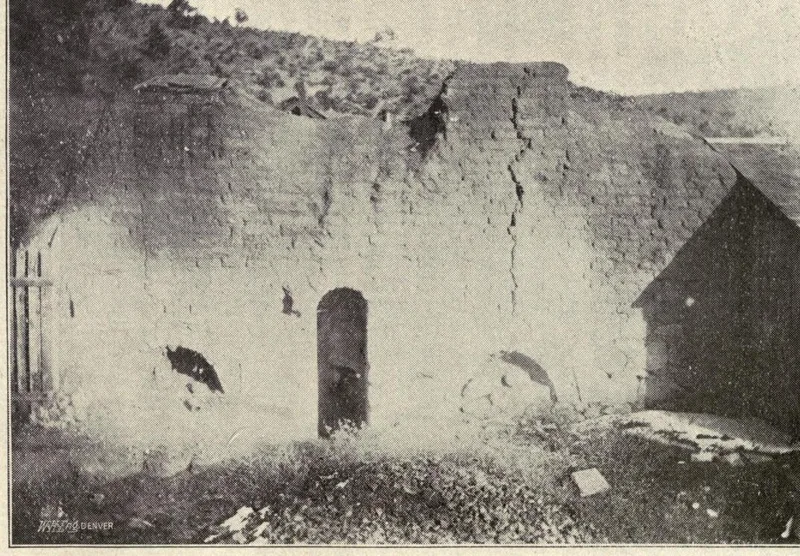
That mine did not stand where the town of Hanover grew. Jones placed the Hanover and Fierro post offices in Hanover Gulch, Fierro about two miles north of Hanover, and the celebrated Hanover mine near Fierro. In 1896 the Las Vegas Daily Optic put the old mine some three miles north of Hanover. Jones wrote that Spaniards had perhaps known it about 1804, and a 1930 Bureau of Mines circular reported relics of Spanish operations near ancient adobe furnaces in the Fierro district.1, 2
Sources: Fayette Alexander Jones, New Mexico Mines and Minerals: being an epitome of the early mining history and resources of New Mexican mines (1904): pp. 40-41; Las Vegas Daily Optic, 1896-03-13, page 3: page 3
Six dates for the first mining, 1841 to the 1860s
When work at the Hanover mine began is not settled. Anderson, quoting the Silver City Independent, puts Hinkle at work in 1841. McLemore's booklet on New Mexico mining districts dates mining in the Fierro-Hanover district to 1850, and Jones put the true discovery in the early or middle 1850s. Raymond's federal report of 1870, as Jones cites it, gives production from 1858, and Eveleth begins the history about 1858. James W. Taylor's Treasury report of 1868 lists the Hanover as "discovered in 1860." The 1902 governor's report dates the German's relocation of the mine "nearly forty years ago." Counted back from 1902, those words would point to the early 1860s.3, 1, 4
Sources: George B. Anderson (ed.), Pacific States Publishing Co., History of New Mexico: Its Resources and People, vol. 2 (1907): vol. 2, p. 938; vol. 2, p. 939 (quoting the Silver City Independent, c. 1906); Robert W. Eveleth, Minerals and mining history of the Fierro-Hanover district, Grant County, New Mexico (abstract), 16th Annual New Mexico Mineral Symposium (1995): abstract, p. 4; James W. Taylor, U.S. Treasury Department, Report of James W. Taylor on the Mineral Resources of the United States East of the Rocky Mountains (1868): p. 6 (section on New Mexico copper); Governor Miguel A. Otero, Report of the Governor of New Mexico to the Secretary of the Interior, 1902: p. 452
Lindgren, Graton and Gordon of the Geological Survey, writing from field work of 1905, found that the record of the mine's operation reached back only to about the middle of the nineteenth century. Anderson's 1841 date comes from a newspaper story printed some sixty years after the events it describes. As Anderson tells it, Hinkle reached Santa Rita with a government pack-train in August 1841, visited the Arroyo de Alamo early in September and at once built a stone cabin and furnaces.
Sources: Waldemar Lindgren, Louis C. Graton and Charles H. Gordon, The Ore Deposits of New Mexico (USGS Professional Paper 68) (1910): p. 306; George B. Anderson (ed.), Pacific States Publishing Co., History of New Mexico: Its Resources and People, vol. 2 (1907): vol. 2, p. 938; vol. 2, p. 939; vol. 2, p. 939 (quoting the Silver City Independent, c. 1906)
The Independent, as Anderson quotes it, said Hinkle's account books showed shipments of ingot copper worth $25,000 to $35,000 each, sent to Old Mexico, Vera Cruz and Spain. Output ran without a break, in this account, from September 1841 until October 1843, when hundreds of Apaches attacked the little hamlet in Hanover Gulch. Hinkle escaped after a warning, the story says, and his storekeeper was killed. The same account brings Hinkle back about the middle 1850s, mining and smelting until the Confederate invasion stopped work in 1861.
Anderson's pages name a few of the men who worked there. By the account he prints, Manuel Barela built furnaces in the late 1850s where the west fork meets the main gulch. That was the second settlement of Hanover Gulch, fed mainly with ore from the old Hanover mine. Leonardo Zapata of Santa Rita, in his seventy-sixth year when the Independent wrote, had worked as a copper refiner for Hinkle. Robert Kirk, a Hanover mine worker, was among the first to reach the Pinos Altos gold field in May 1860.5
Copper by way of Texas, and a war, 1858 to 1880
By the late 1850s Hanover copper travelled a long way to market. Rossiter W. Raymond, the U.S. Commissioner of Mining Statistics, described ore with much native copper in sheets and lumps, lying in masses up to 50 or 60 feet wide. Jones, citing Raymond, credits the mine with about 1,000,000 pounds of copper from 1858 to 1861, smelted on the spot. It was cast into pigs of 100 to 120 pounds, Jones wrote, hauled by mule teams through Mesilla to Port Lavaca, Texas, and sent by schooner to New York.4, 6
Spencer and Paige of the Geological Survey put the full cost delivered in New York at 16 1/4 cents a pound, against a normal price of 23 cents. Raymond reported that the copper sold there for 23 cents and commanded "a price in the market equal to the best Russian copper." He also passed on a report that the ore had averaged 58 percent copper.
Sources: A. C. Spencer and Sidney Paige, Geology of the Santa Rita Mining Area, New Mexico (USGS Bulletin 859) (1935): p. 6, History of mining; Rossiter W. Raymond, U.S. Commissioner of Mining Statistics, Statistics of Mines and Mining in the States and Territories West of the Rocky Mountains (H. Ex. Doc. 207, 41st Cong., 2d sess.) (1870): p. 403
The Civil War ended the trade. Raymond reported that Confederate forces confiscated the mine's machinery and 187,000 pounds of copper and took them to San Antonio. Bancroft, summarizing the governor's message of 1861-62, wrote that work at the Santa Rita and Hanover copper mines stopped during the invasion and revived in a small way from 1863. In October 1861 the Nashville Union and American printed news from Pinos Altos that six men had left the Hanover copper mines to look for stock; three were found murdered, apparently by Apaches.7, 8
Sources: Rossiter W. Raymond, U.S. Commissioner of Mining Statistics, Statistics of Mines and Mining in the States and Territories West of the Rocky Mountains (H. Ex. Doc. 207, 41st Cong., 2d sess.) (1870): p. 403; History of Arizona and New Mexico, 1530-1888 (Works of Hubert Howe Bancroft, vol. 17) (1889): p. 649
Paper interest outlasted the work. A Hanover Copper Mining Company was incorporated by the legislature of 1866-67, according to Bancroft, and Jones counted 57 claims recorded in the Central district by 20 September 1869, most at Hanover, Santa Rita and San Jose. Taylor's 1868 report listed the Hanover first among the territory's leading copper mines. In Raymond's 1870 report it stood idle; its owners were all rich men, he wrote, who could easily afford the $50,000 needed to restart it.9
Sources: History of Arizona and New Mexico, 1530-1888 (Works of Hubert Howe Bancroft, vol. 17) (1889): p. 710, footnote on legislative acts, 16th assembly, 1866-7; James W. Taylor, U.S. Treasury Department, Report of James W. Taylor on the Mineral Resources of the United States East of the Rocky Mountains (1868): p. 6 (section on New Mexico copper); Rossiter W. Raymond, U.S. Commissioner of Mining Statistics, Statistics of Mines and Mining in the States and Territories West of the Rocky Mountains (H. Ex. Doc. 207, 41st Cong., 2d sess.) (1870): p. 403
Claims, bonds and early iron, 1878 to 1890
Claims multiplied in Hanover Gulch from 1878. Anderson writes that the McGregor brothers located the Lone Star that year as a silver-lead mine. His list of the Hanover group in 1882 runs from the Copper Pan of Captain Eakridge to the Lucky Chance of Jack Shanley. In November 1882 the Albuquerque Morning Journal reported that the camp was looking up and might become one of the territory's leading copper districts.
Sources: George B. Anderson (ed.), Pacific States Publishing Co., History of New Mexico: Its Resources and People, vol. 2 (1907): vol. 2, p. 943, 'Zinc Mining'; vol. 2, p. 731; The Albuquerque Morning Journal, 1882-11-16, page 4: page 4
Owners also bonded claims, giving options to buy a claim at a set price within a set time. In February 1883 the New Southwest reported that Hiram J. Hutchinson and Mr. Shanley had bonded four Hanover copper claims for $50,000 on three months' time. In April 1884 the Las Vegas Daily Gazette reported that George Cassidy would work claims beside the old Hanover mine, "which is owned by King Catron of Santa Fe," and sell ore to the Socorro and Deming smelters.
Sources: The Black Range (Robinson/Chloride, N.M.), 1883-02-09, page 1: page 1; Las Vegas Daily Gazette, 1884-04-22, page 2: page 2
Copper also went to Silver City. A Hanover Gulch claim was leased to the Flagler outfit in 1888, the Silver City Enterprise reported. In April 1889 the Sierra County Advocate reported that the Flagler smelter had closed for an unsteady copper market. It had turned out nearly 500,000 pounds of copper since September from the company's mines in Hanover Gulch.10
Sources: Sierra County Advocate (Kingston, N.M.), 1889-04-16, page 1: page 1
Iron entered the trade as a helper to other metals. In 1883 the Las Vegas Daily Gazette described Hanover iron, part magnetite and part hematite, used as a flux for silver ores. A flux is material added in smelting to carry off waste rock. According to the 1930 Bureau of Mines circular, some loose surface ore from Fierro, hauled by ox teams returning from Fort Bayard, was shipped to Pueblo soon after the railroad reached Silver City. In March 1890 the Santa Fe Daily New Mexican reported that Troutman & Smith had shipped just over 11,430 tons from the Hanover iron mines in 1889.11
Sources: Las Vegas Daily Gazette, 1883-08-01, page 4: page 4; Santa Fe Daily New Mexican, 1890-03-13, page 4: page 4
Zinc wagons and an Illinois syndicate, 1889 to 1895
Zinc came next. M. W. Neff told the Southwest Sentinel in November 1889 that 100 tons of 40 percent zinc ore lay stocked at his Hanover mines. In January 1890 the Silver City Enterprise wrote that zinc ore had once gone to La Salle, Illinois, at a profit on a freight rate of $14.50 a ton. With the through rate cut to $10, it said, the road from Silver City to Hanover ought to be lined with zinc wagons. That April the New Mexican reported six Hanover Gulch zinc mines sold to an Illinois company for $20,500.
Sources: Sierra County Advocate (Kingston, N.M.), 1889-11-22, page 1: page 1; Santa Fe Daily New Mexican, 1890-01-23, page 4: page 4; Santa Fe Daily New Mexican, 1890-04-29, page 4: page 4
In May 1890 the New Mexican reported that John Brockman of Silver City, agent of an Illinois syndicate, now held all of Grant County's developed zinc mines. By the Silver City Sentinel's account, $10,000 could have bought every zinc and copper mine in the district the summer before, and they could not now be bought for less than $500,000. Twenty men were at work in the zinc mines that July, the New Mexican reported. At the end of 1890 a Silver City dispatch to the New York Sun said all the county's zinc, about two carloads a week, came from Hanover.
Sources: Santa Fe Daily New Mexican, 1890-05-08, page 4: page 4; Santa Fe Daily New Mexican, 1890-05-23, page 4: page 4; Santa Fe Daily New Mexican, 1890-07-01, page 4: page 4; Western Liberal (Lordsburg, N.M.), 1891-01-23, page 1: page 1
William P. Blake described the work in a paper read to the American Institute of Mining Engineers in February 1894. Miners quarried the oxidized zinc ore at the surface and followed it down in irregular pits, some of them 60 feet deep or more, with simple windlasses. Claim owners were "generally content if they can realize wages," he wrote, and freight alone to Illinois or Wisconsin cost about $12 a ton. Rail shipments up to January 1894 came to 1,368 short tons, mostly to Mineral Point, Wisconsin. The depression of 1893 and low prices then stopped work on many claims.
William Swancoat, manager of the Mineral Point Zinc Company at Hanover, told the Southwest-Sentinel in March 1894 that his company was unlikely to work its mines again. By the newspapers' account it did return: the Sierra County Advocate found eight men at work under Swancoat in September 1895. Kaas's Silver City tour guide dates zinc mining at Hanover from around 1904. Against that, Anderson traces the zinc belt to the Lone Star of 1878, and the governor's report of 1902 said zinc had gone from Hanover Gulch to Mineral Point for the past twelve years.12
Sources: Southwest-Sentinel (Silver City, N.M.), 1894-03-20, page 3: page 3; Sierra County Advocate (Kingston, N.M.), 1895-09-20, page 1: page 1; George B. Anderson (ed.), Pacific States Publishing Co., History of New Mexico: Its Resources and People, vol. 2 (1907): vol. 2, p. 943, 'Zinc Mining'; Governor Miguel A. Otero, Report of the Governor of New Mexico to the Secretary of the Interior, 1902: p. 452
The Anson S. smelter, 1888 to 1892
Copper smelting returned to the gulch at the Anson S. mine, and the sources disagree about when. A 1930 Bureau of Mines circular says a water-jacketed copper smelter was built at the Anson mine in 1888 and ran for only one year. Newspapers report a working smelter there from 1890 to 1892. In July 1890 the New Mexican reported M. W. Neff's new 30-ton smelter at Hanover running smoothly on Anson S. ore. The Silver City Enterprise reported that Neff & Co. started their smelter at the Anson S. on Wednesday, 1 July 1891.13
Sources: Santa Fe Daily New Mexican, 1890-07-18, page 1: page 1; Santa Fe Daily New Mexican, 1891-07-07, page 1: page 1
Newspaper reports show the smelter running in bursts. In September 1891 its superintendent, J. R. Johnson, reported 18 tons of bar copper made in four and a half days. Later that month the New Mexican reported it closed for want of coke. In March 1892 the Sentinel reported more than 89,000 pounds of bullion from its last run, one of the largest copper shipments ever made from the county. By July, the Southwest-Sentinel reported, the pipe line that had brought the smelter water was being taken up.14
Sources: Sierra County Advocate (Kingston, N.M.), 1891-09-11, page 1: page 1; Santa Fe Daily New Mexican, 1891-09-23, page 4: page 4; Santa Fe Daily New Mexican, 1892-03-17, page 1: page 1; Southwest-Sentinel (Silver City, N.M.), 1892-07-26, page 3: page 3
Other furnaces followed. In August 1894 the Sierra County Advocate reported eighteen tons of copper from a Hanover smelter, made from ore gathered off old dumps, shipped to New York. A year and a half later the New Mexican reported the Arizona and New Mexico smelter at Hanover running full time on ore bought from local producers. Lindgren's team later judged that smelting in the district, tried at Santa Rita and the Ivanhoe mine, had on the whole been unsuccessful.
Sources: Sierra County Advocate (Kingston, N.M.), 1894-08-31, page 3: page 3; Santa Fe Daily New Mexican, 1896-01-30, page 1: page 1; Waldemar Lindgren, Louis C. Graton and Charles H. Gordon, The Ore Deposits of New Mexico (USGS Professional Paper 68) (1910): p. 53 (contact-metamorphic deposits); p. 306
The Silver City & Northern reaches Hanover, 1891
Iron brought the railroad, as Blake later wrote. In March 1891 the Silver City Sentinel reported Hanover Gulch iron claims bonded to eastern men, and about sixteen men running a preliminary line from Whitewater into the gulch. Silver City citizens met at Morrill Hall to press for a line from their own town. In that paper's words, "For once, Nature is against us." The Sentinel conceded that the country from Whitewater to the gulch was level and unbroken, while the Silver City route was hilly.
Sources: William P. Blake, Zinc-Ore Deposits of Southwestern New Mexico, Transactions of the American Institute of Mining Engineers, vol. 24, pp. 187-195 (1894 (read February 1894; volume printed 1895)): pp. 188-189; Santa Fe Daily New Mexican, 1891-03-19, page 1: page 1; Deming Headlight, 1891-03-28, page 2: page 2
Newspapers followed the work week by week. Superintendent T. G. Condon promised in April that his locomotive whistle would be heard in Hanover within three months, the Silver City Enterprise reported. On 25 September the New Mexican reported the road completed to Hanover, with ore shipments begun. Anderson's sketch of the chief engineer, J. B. Gilchrist, also gives September 1891. In the governor's report Condon said the road reached the iron deposits, the Mineral Point Zinc Company's zinc properties and the Anson S. copper properties. That report said the railroad had more than doubled iron output in the past month, to five or six carloads a day.
Sources: Santa Fe Daily New Mexican, 1891-04-06, page 1: page 1; Santa Fe Daily New Mexican, 1891-09-25, page 1: page 1; George B. Anderson (ed.), Pacific States Publishing Co., History of New Mexico: Its Resources and People, vol. 2 (1907): vol. 2, p. 748, sketch of J. B. Gilchrist; Governor L. Bradford Prince, Report of the Governor of New Mexico to the Secretary of the Interior, 1891: p. 36; p. 32
Sources give the branch five lengths. The Deming Headlight gave the grading contract as twenty-three miles in April 1891, and the Albuquerque Weekly Citizen called it a twenty-mile road in 1894. Condon gave 19 miles, and Anderson and an 1891 New Mexican report eighteen. David F. Myrick's history of New Mexico railroads, as excerpted on UtahRails.net, gives 14 miles from Whitewater to San Jose, a station just east of present-day Hanover Junction. Blake wrote in 1894 that the railway ended at Hanover. Myrick's line ends at San Jose and Condon's in Hanover Gulch, so the figures may not measure the same track.15
Sources: Deming Headlight, 1891-04-04, page 3: page 3; Albuquerque Weekly Citizen, 1894-06-16, page 4: page 4; Governor L. Bradford Prince, Report of the Governor of New Mexico to the Secretary of the Interior, 1891: p. 36; William P. Blake, Zinc-Ore Deposits of Southwestern New Mexico, Transactions of the American Institute of Mining Engineers, vol. 24, pp. 187-195 (1894 (read February 1894; volume printed 1895)): p. 188
Water was the line's enemy. After the floods of July 1895 the New Mexican reported one hundred men repairing washouts between Whitewater and Hanover. In August 1896 the Western Liberal of Lordsburg wrote that the road washed out each wet season, "As regularly as the rainy season comes." The governor's report for 1896 said Hanover's iron mines stood idle after the washouts cut off shipping.16
Sources: Santa Fe Daily New Mexican, 1895-07-20, page 1: page 1; Western Liberal (Lordsburg, N.M.), 1896-08-07, page 3: page 3
Who owned the road afterward is reported three ways. Anderson's sketch of J. W. Bible says the Santa Fe acquired it in 1891. His sketch of Gilchrist says it ran until the 1896 washout and that the Santa Fe bought it in 1898 and repaired it to Santa Rita. In April 1897 the Deming Headlight reported the Atchison, Topeka & Santa Fe already running the line six days a week.
Sources: George B. Anderson (ed.), Pacific States Publishing Co., History of New Mexico: Its Resources and People, vol. 2 (1907): vol. 2, p. 748; Deming Headlight, 1897-04-02, page 4: page 4
Iron, a Pennsylvania syndicate and a tonnage puzzle, 1892 to 1899
In March 1892 the Hanover iron mines changed hands. The Sentinel reported thirty-one of them, nine W. H. Newcomb's and nine John Brockman's, sold to a syndicate of Pennsylvania capitalists for $110,000. Lewin W. Barringer, a Philadelphia attorney, closed the deal. Forty thousand dollars in currency and coin arrived at Silver City and was paid out for the sale, the Sentinel reported. In April 1893, by contrast, the New Mexican reported that New York capitalists had bought the mines the previous fall from Betts, Newcomb and Brockman.
Sources: Las Vegas Free Press, 1892-03-26, page 1: page 1; Sierra County Advocate (Kingston, N.M.), 1892-04-01, page 3: page 3; Santa Fe Daily New Mexican, 1893-04-03, page 4: page 4
The start of the Hanover Bessemer association is disputed. A 1930 Bureau of Mines circular says the Hanover Bessemer Iron Ore Association was organized in 1899, when the railroad was built to Fierro, and leased its ore to Colorado Fuel & Iron. In January 1893, though, the Southwest-Sentinel reported R. A. F. Penrose and L. W. Barringer of Philadelphia as heavy stockholders in an association of that name owning over 30 Hanover iron mines. In May 1895 the Sentinel called Barringer president of the Hanover Bessemer Iron Co.17
Sources: Southwest-Sentinel (Silver City, N.M.), 1893-01-17, page 3: page 3; Southwest-Sentinel (Silver City, N.M.), 1895-05-14, page 3: page 3
Shipments rose and fell with railroad quarrels and freight rates, as the Silver City papers reported them. After the Santa Fe stopped furnishing cars in the summer of 1892, the Sentinel found practically nothing doing at Hanover. The Santa Fe's injunction suit against the smaller road, a case asking a court to forbid some action, was settled that September, and the Enterprise expected about fifty miners at work. On 29 June 1893 the mines closed. A $3.50 rate to Pueblo restarted them in August 1894, and in December the Eagle reported shipments stopped again, putting miners and teamsters out of work.18, 19, 20, 21
Sources: Santa Fe Daily New Mexican, 1892-09-19, page 1: page 1; The Eagle (Silver City, N.M.), 1894-12-26, page 5: page 5
Sources disagree widely on how much iron left Hanover in the 1890s. Blake reported 22,285 tons from the district between 1 November 1891 and 1 April 1893. Spencer and Paige, using Bureau of Mines figures, give 44,500 long tons mined by the Southwestern Coal & Iron Company from 1891 to 1896. Anderson says that company shipped 750,000 tons in the seven years before it transferred its properties to Colorado Fuel & Iron in 1898.
Sources: William P. Blake, Zinc-Ore Deposits of Southwestern New Mexico, Transactions of the American Institute of Mining Engineers, vol. 24, pp. 187-195 (1894 (read February 1894; volume printed 1895)): p. 195; A. C. Spencer and Sidney Paige, Geology of the Santa Rita Mining Area, New Mexico (USGS Bulletin 859) (1935): p. 10, Production; George B. Anderson (ed.), Pacific States Publishing Co., History of New Mexico: Its Resources and People, vol. 2 (1907): vol. 2, p. 944
A camp with a post office, a school and a precinct, 1891 to 1900
Hanover's post office has four dates. A Pinos Altos paper reported in May 1891 that George Harris had been appointed postmaster at Hanover. In April 1892 the Las Vegas Free Press listed Hanover among newly established offices, with A. E. Dawson as postmaster. The Blevins-Helbock post office dataset gives 1892. In September 1892 the New Mexican listed Hanover among offices established that August; its list also includes an office the Free Press had reported in April. That overlap suggests the two lists may record different stages in opening an office.
Sources: Sierra County Advocate (Kingston, N.M.), 1891-05-22, page 1: page 1; Las Vegas Free Press, 1892-04-21, page 2: page 2; Cameron Blevins and Richard W. Helbock, US Post Offices (dataset), us-post-offices.tab (2021): us-post-offices.tab, rows HANOVER (ID 140405) and FIERRO; Santa Fe Daily New Mexican, 1892-09-13, page 1: page 4
A Silver City visitor in November 1894 described Hanover in the Southwest-Sentinel as a little mountain village becoming famous for its iron mines, with a blacksmith shop. That fall the Eagle reported about 140 voters registered there, and in December it called Hanover "one of the busiest camps in New Mexico," with no idle men. Newspapers counted twenty men in the zinc mines in 1890, sixty to seventy in the copper mines in April 1895 and about thirty in the iron mines that July.
Sources: Southwest-Sentinel (Silver City, N.M.), 1894-11-06, page 3: page 3; The Eagle (Silver City, N.M.), 1894-10-17, page 2: page 2; The Eagle (Silver City, N.M.), 1894-12-12, page 2: page 2; Santa Fe Daily New Mexican, 1890-07-01, page 4: page 4; Santa Fe Daily New Mexican, 1895-04-09, page 4: page 4; Deming Headlight, 1895-07-05, page 4: page 4
Hanover had a public school by 1895. Miss Gertrude Scott took charge of the Hanover public school on 7 October 1895, the Eagle reported, and returned to Silver City in April 1896 after a six months' term. Miss Myrtle Decker arrived from Hannibal, Missouri, that October to take the school. In the summer of 1896 the Eagle reported the largest flood ever seen in Hanover Gulch, which washed down several houses. In 1898, Anderson writes, J. W. Bible organized Murray & Bible, general merchants at Hanover.
Sources: The Eagle (Silver City, N.M.), 1895-10-09, page 4: page 4; The Eagle (Silver City, N.M.), 1896-04-22, page 4: page 4; The Eagle (Silver City, N.M.), 1896-10-14, page 4: page 4; The Eagle (Silver City, N.M.), 1896-08-05, page 3: page 3; George B. Anderson (ed.), Pacific States Publishing Co., History of New Mexico: Its Resources and People, vol. 2 (1907): vol. 2, p. 749, sketch of J. W. Bible
Hanover's population in 1890 and 1900 is hard to fix. A census table printed for 1910, which repeats the 1890 and 1900 counts for Grant County precincts, has no Hanover precinct and does not say which precinct held the camp. The Deming Headlight's 1896 list of Grant County precincts made Hanover No. 13; in that census table, precinct 13 is Santa Rita, with 133 people in 1890 and 1,874 in 1900. A governor's report of 1903 put Hanover and Fierro together at about 1,000 people.22
Sources: U.S. Bureau of the Census, Thirteenth Census of the United States (1910), Vol. III, Population, New Mexico, Table 1: Population of minor civil divisions, 1910, 1900 and 1890 (1913): p. 164 (PDF page 8), Table 1, Grant County; Deming Headlight, 1896-09-11, page 4: page 4
Copper again, and Colorado Fuel and Iron, 1895 to 1905
Work resumed at the old Hanover mine in the middle 1890s. In April 1895 the Silver City Enterprise reported that Jo E. Sheridan had leased it from T. B. Catron. By May, the Deming Headlight reported, two big teams were hauling 20 to 24 tons every other day to the Van smelter at Silver City. Anderson writes that in 1897 N. S. Berry, agent for F. E. Simpson of Boston, leased the mine for a year and in four months mined and smelted 6,000 tons of 12 to 28 percent copper ore.23
Sources: Deming Headlight, 1895-05-31, page 4: page 4; George B. Anderson (ed.), Pacific States Publishing Co., History of New Mexico: Its Resources and People, vol. 2 (1907): vol. 2, p. 941
Berry's date may be uncertain. A wedding notice reprinted in the Eagle in December 1895 already had a Mr. Berray, so printed and probably the same man, as superintendent of Frank Simpson's copper and iron mines at Hanover. That is more than a year before Anderson's date. The governor's report of 1898 said $180,000 worth of 14 percent ore had come out of the old Hanover mine in a few months.
Sources: The Eagle (Silver City, N.M.), 1895-12-25, page 6: page 6; George B. Anderson (ed.), Pacific States Publishing Co., History of New Mexico: Its Resources and People, vol. 2 (1907): vol. 2, p. 941; Governor Miguel A. Otero, Report of the Governor of New Mexico to the Secretary of the Interior, 1898: p. 214
Larger companies closed the decade. According to the governor's report of 1899, Colorado Fuel and Iron was shipping 200 tons a day from two Hanover iron veins. Anderson writes that large-scale iron mining produced the camp of Fierro, two miles north of Hanover; Fierro had a post office from 1899. Spencer and Paige write that Phelps Dodge took over the Hanover mine and others about 1898-99, while Jones reported its sale to Phelps, Dodge and Co. in 1902.24, 25
Sources: Governor Miguel A. Otero, Report of the Governor of New Mexico to the Secretary of the Interior, 1899: pp. 384-385, 'Hanover'; George B. Anderson (ed.), Pacific States Publishing Co., History of New Mexico: Its Resources and People, vol. 2 (1907): vol. 2, pp. 943-944, 'Iron Developments'; Cameron Blevins and Richard W. Helbock, US Post Offices (dataset), us-post-offices.tab (2021): us-post-offices.tab, rows HANOVER (ID 140405) and FIERRO
In 1905 a Geological Survey team examined the mine that named the gulch. Its shaft was 200 feet deep, and no ore of importance had been found below 150 feet. The soft ore body, about 400 feet long, was canoe-shaped. All that remained to work was old fill and the edges of the stopes, the chambers left where ore had been taken out.
Read more on Salars.net
Part 2 of 9 of the series Hanover, New Mexico: iron, zinc and the Empire Zinc strike.
Sources
- Jones (1904) says the Hanover mine was 'perhaps' known to Spaniards about 1804 but was truly discovered by a German from Hanover in the 1850s, which gave it its name. New Mexico Mines and Minerals: being an epitome of the early mining history and resources of New Mexican mines, p. 41. View source ↗ (reported)
- The 1930 circular reported that relics of Spanish operations had been found near ancient adobe furnaces and slag dumps in the Fierro district. Information Circular 6361: Mining and Engineering Methods and Costs of the Hanover Bessemer Iron and Copper Co., Fierro, New Mexico, IC 6361, History, p. 2. View source ↗ (reported)
- McLemore dates the start of mining in the Fierro-Hanover district to 1850, the Bayard district to 1858 and the Steeple Rock district to 1860, and says the Civil War then halted most New Mexico mining. Mining districts and prospect areas in New Mexico (NMBGMR Resource Map 24, booklet), p. 3 (PDF p. 4), Mining history. View source ↗ (reported)
- Citing Raymond's 1870 report, Jones credits the Hanover mine with about 1,000,000 pounds of copper between 1858 and 1861, smelted on site at ten cents a pound. New Mexico Mines and Minerals: being an epitome of the early mining history and resources of New Mexican mines, p. 41 (page image n60 checked). View source ↗ (reported)
- Robert Kirk, a Hanover mine worker, was among the first to reach the new gold field in May 1860 and was still living at Pinos Altos in 1907. George B. Anderson (ed.), History of New Mexico: Its Resources and People, vol. 2 (Los Angeles: Pacific States Publishing Co., 1907), vol. 2, p. 940. View source ↗ (reported)
- Before the Civil War, Hanover copper was cast into 100-120 pound pigs and hauled by mule teams through Mesilla to the Texas port of Lavaca, then shipped by schooner to New York. New Mexico Mines and Minerals: being an epitome of the early mining history and resources of New Mexican mines, p. 41 (page image checked). View source ↗ (reported)
- Jones says that during the Confederate invasion work at Hanover stopped and its machinery and copper stock were carried to San Antonio and confiscated by Southern troops. New Mexico Mines and Minerals: being an epitome of the early mining history and resources of New Mexican mines, p. 41 (page image n60 checked). View source ↗ (reported)
- In October 1861 (Nashville Union and American, Oct. 23, 1861) news from Pino Alto told of another massacre: some twelve days earlier six men left the Hanover copper mines in search of stock; three were found murdered, apparently by Apaches, and the other three, including Jerome Ellsburg, were missing and presumed killed. Nashville Union and American, Oct. 23, 1861, p. 2, Nashville Union and American, Oct. 23, 1861, p. 2; checked against page image. View source ↗ (reported)
- Jones reports that 57 mining claims had been recorded in the Central district at Fort Bayard by 20 September 1869, most of them at Hanover, Santa Rita and San Jose. New Mexico Mines and Minerals: being an epitome of the early mining history and resources of New Mexican mines, p. 34. View source ↗ (reported)
- The Enterprise reported (3 August 1888) that a copper claim at Hanover Gulch owned by Dr. E. L. Stephens was leased to 'the Flagler outfit', and that a dispute over a shanty on it ended in a shooting. This is Silver City, New Mexico, 1888-1890 (compilation of Silver City Enterprise items), "From the August 3, 1888, Issue of The Enterprise" section, This is Silver City, New Mexico, 1888-1890 (archive.org/details/silvercity1888; IA full text checked). View source ↗ (reported)
- Soon after the railroad reached Silver City, some iron 'float' ore hauled from Fierro by ox teams returning from bringing supplies to Fort Bayard was shipped to Pueblo, according to the 1930 company-manager's circular. Information Circular 6361: Mining and Engineering Methods and Costs of the Hanover Bessemer Iron and Copper Co., Fierro, New Mexico, IC 6361, History, p. 2. View source ↗ (documented)
- Zinc mining at Hanover began around 1904; the Empire Zinc mine was the site of a 15-month strike in 1950-1952 over a dual wage system that paid Mexican American miners less, and remained a major producer until 1969. L. Michael Kaas, Silver City historical tour guide, Mining History Association (c. 2011, inferred), Kaas, Hanover section. View source ↗ (reported)
- A water-jacketed copper smelter built at the Anson mine in the Fierro-Hanover area in 1888 operated for only one year. Information Circular 6361: Mining and Engineering Methods and Costs of the Hanover Bessemer Iron and Copper Co., Fierro, New Mexico, IC 6361, History, p. 2. View source ↗ (documented)
- The Sentinel reported in July 1892 that the pipe line that had supplied water to the Anson S. smelter at Hanover was being taken up and the pump removed from the mine. Southwest-Sentinel (Silver City, N.M.), 1892-07-26, page 3, Southwest-Sentinel, 1892-07-26, p. 3. View source ↗ (reported)
- According to David F. Myrick's New Mexico's Railroads (rev. ed. 1990), as excerpted on UtahRails.net, in 1891 an independent group opened the 14-mile Silver City and Northern Rail Road from Whitewater through Hurley to San Jose, a station just east of present-day Hanover Junction. Kennecott Chino Mines Division (railroad history compilation, quoting David F. Myrick, New Mexico's Railroads, 1990, pp. 185-192), utahrails.net/bingham/kcc-chino.php, Myrick excerpt (Myrick pp. 185-192). View source ↗ (reported)
- The 1896 report said Hanover's iron mines, worked for months that year, stood idle after washouts on the Silver City and Northern Railroad cut off shipping. Report of the Governor of New Mexico to the Secretary of the Interior, bound volume containing the reports for 1887-1897 (Google scan, Internet Archive id reportgovernorn03integoog), Report of the Governor 1896, p. 72. View source ↗ (documented)
- The Hanover Bessemer Iron Ore Association was organized in 1899, when the railroad was built to Fierro, and leased its ore to the Colorado Fuel & Iron Co. Information Circular 6361: Mining and Engineering Methods and Costs of the Hanover Bessemer Iron and Copper Co., Fierro, New Mexico, IC 6361, History, p. 2. View source ↗ (documented)
- The Sentinel reported in August 1892 that there was 'practically nothing doing' at Hanover since the Santa Fe stopped furnishing cars to the Silver City and Northern about six weeks earlier. Southwest-Sentinel (Silver City, N.M.), 1892-08-30, page 3, Southwest-Sentinel, 1892-08-30, p. 3. View source ↗ (reported)
- The Sentinel reported in September 1892 that the Santa Fe railroad's injunction suit against the Silver City and Northern had been settled and a through rate on ore from Hanover re-established. Southwest-Sentinel (Silver City, N.M.), 1892-09-20, page 3, Southwest-Sentinel, 1892-09-20, p. 3. View source ↗ (reported)
- The Sentinel reported that on Thursday, 29 June 1893, the mines at Georgetown, Lone Mountain and Hanover closed down. Southwest-Sentinel (Silver City), 1893-07-04, page 3, Southwest-Sentinel, 1893-07-04, p.3, 'Mines Closed Down'. View source ↗ (reported)
- The Sentinel reported in August 1894 that two carloads of iron ore a day were being shipped from the Hanover mines to the Pueblo smelter, the Santa Fe road's new rate of $3.50 a ton from Hanover to Pueblo having enabled the mines to restart. Southwest-Sentinel (Silver City), 1894-08-14, page 3 (local page), Southwest-Sentinel, 1894-08-14, p.3, 'Mining and Milling', col.4. View source ↗ (reported)
- The 1903 report put Santa Rita at 1,874 people, next to Silver City in size, with Central at 1,008 and Hanover and Fierro together about 1,000. Report of the Governor of New Mexico to the Secretary of the Interior, 1903 (Internet Archive id reportgovernorn01integoog), Gov. report 1903, p. 79. View source ↗ (documented)
- Quoting the Enterprise, the Sentinel reported in April 1895 that Jo E. Sheridan had leased the old Hanover mine from T. B. Catron, a mine said to have been worked by the Spaniards, with ruins of five smelting furnaces nearby. Southwest-Sentinel (Silver City), 1895-04-16, page 3 (local page), Southwest-Sentinel, 16 April 1895, p.3, item credited 'Enterprise'. View source ↗ (reported)
- About 1898-99 the Phelps Dodge Co. took over several properties near Hanover, including the Modoc, Hanover and Emma; the Emma was worked by lessees in 1908 and by the Copper Queen Consolidated Mining Co. in 1910. Geology of the Santa Rita Mining Area, New Mexico (USGS Bulletin 859), USGS Bulletin 859, History of mining, p. 8. View source ↗ (reported)
- The Hanover mine later passed from T. B. Catron to C. F. Grayson and Co. of Silver City, which sold it to Phelps, Dodge and Co. in 1902. New Mexico Mines and Minerals: being an epitome of the early mining history and resources of New Mexican mines, p. 41. View source ↗ (reported)
"Documented" means the source is a record of the time or a direct survey; "reported" means a later account or secondary history, attributed in the text.
Cite this page: “The first mines at Hanover, to 1900.” Grant County Atlas, Salars.net, first published 16 November 2026. https://atlas.salars.net/stories/hanover/the-first-mines-to-1900
Discussion
What would you add or question? Comments are reviewed before they appear.
Loading comments…